
Based on a presentation for The Best of LKN Business Network by Joe Meehan, Founder and Human Physiologist at Optima Vita Consulting
Quick question before we start: Did you drink a glass of water with electrolytes this morning? Did you spend at least ten minutes outside getting sunlight in your eyes? Or did you wake up, throw back a coffee, and get straight to work?
If you’re like most busy professionals, it’s the latter. And that’s exactly the problem Joe Meehan wants to solve.
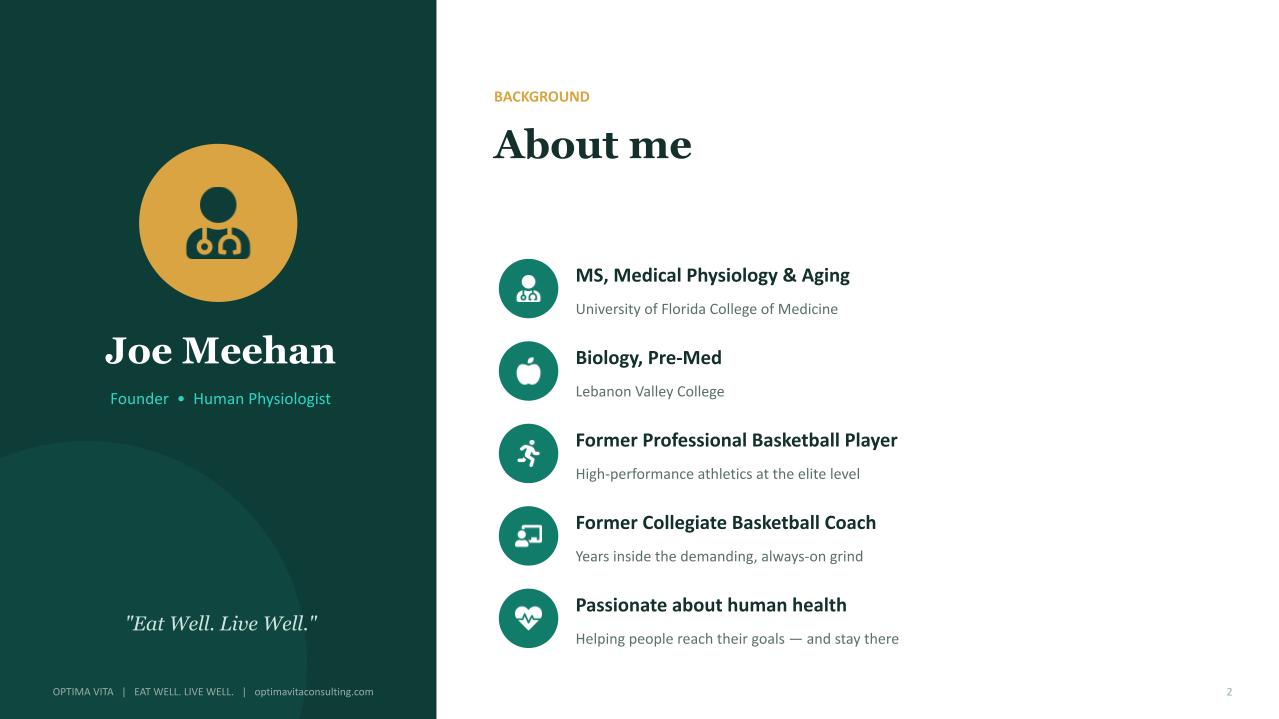
Meehan is a human physiologist with a master’s in medical physiology and aging from the University of Florida College of Medicine. Before that, he played professional basketball overseas and spent nine years coaching college hoops — seven of them at Bucknell University — living the same grind many of us know well: travel, late nights, meals on the road, and inconsistent sleep. His company, Optima Vita, brings those two worlds together, helping driven people perform at their best without sacrificing their health to do it.
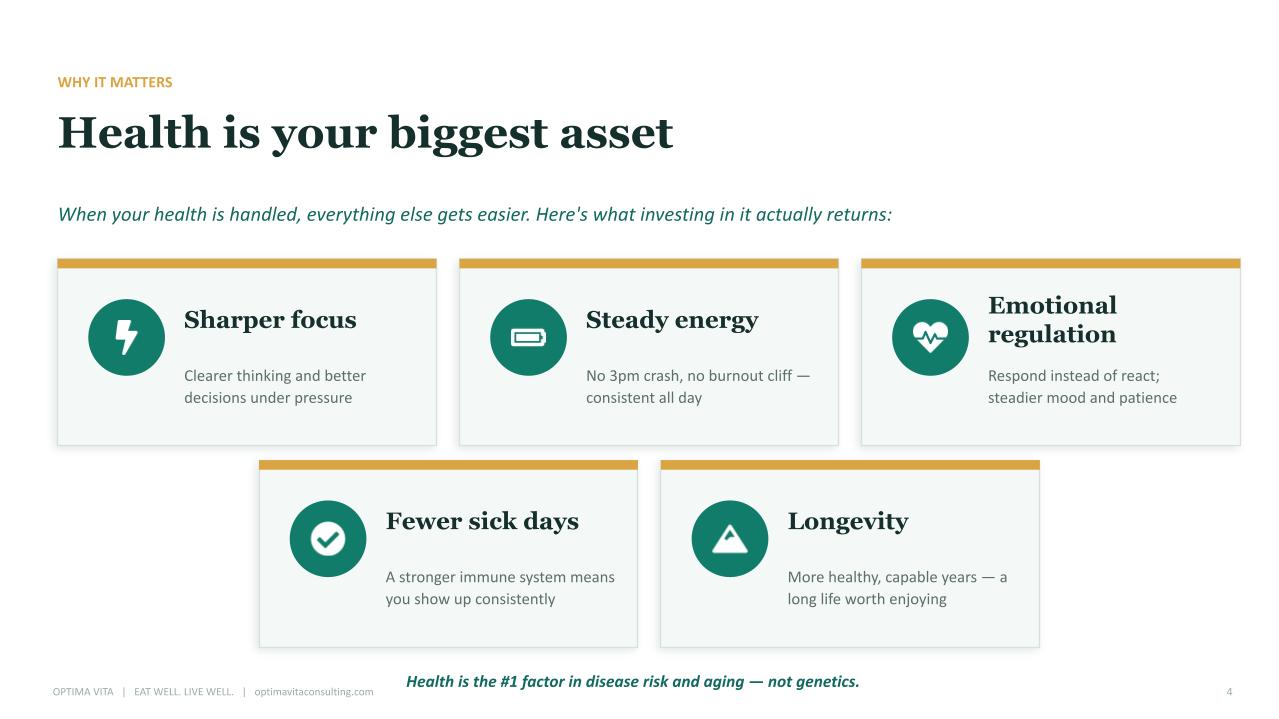
Health Is Your Biggest Asset
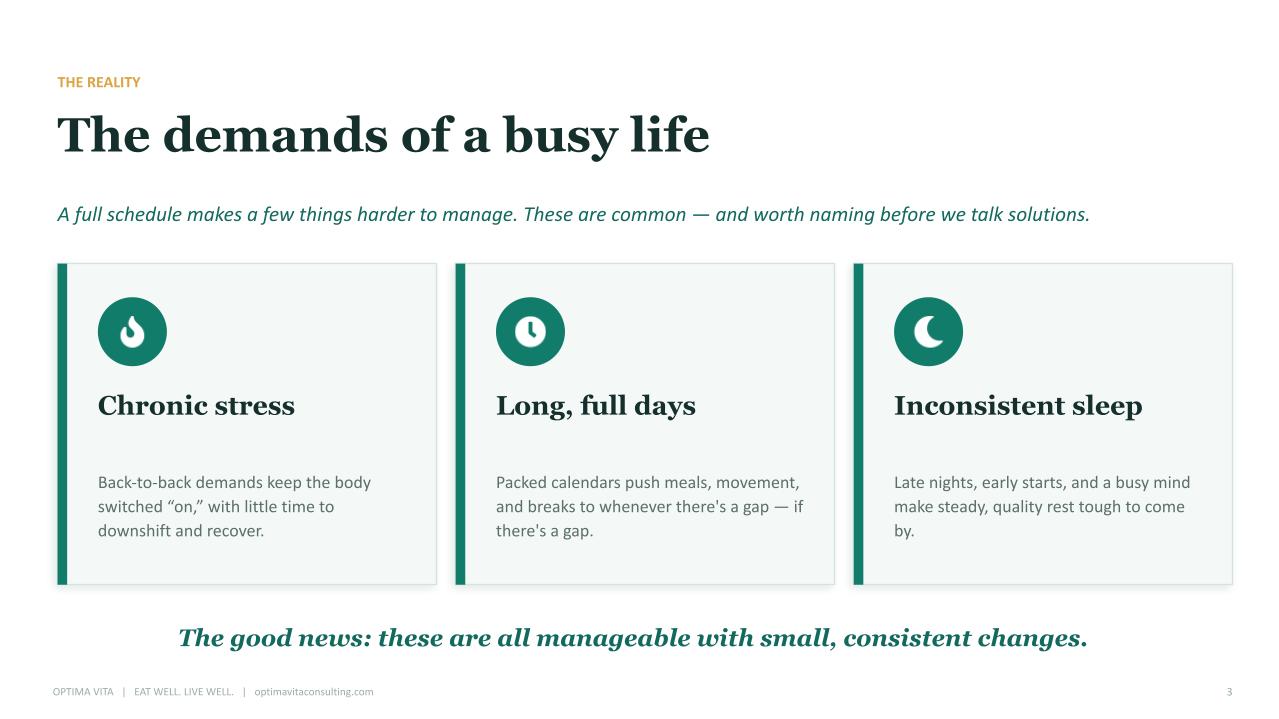
Busy professionals share a familiar set of challenges: chronic stress, long and full days, and inconsistent sleep. Meals get pushed to whenever there’s a gap in the calendar — if there’s a gap at all.
Here’s the thing, though. If you’re low energy, fatigued, and sleep deprived, you’re not just feeling lousy — you’re affecting your company, your team, and everyone around you, because you’re not performing at your best. Investing in your health pays back in sharper focus, steady energy throughout the day, emotional regulation, fewer sick days, and longevity.
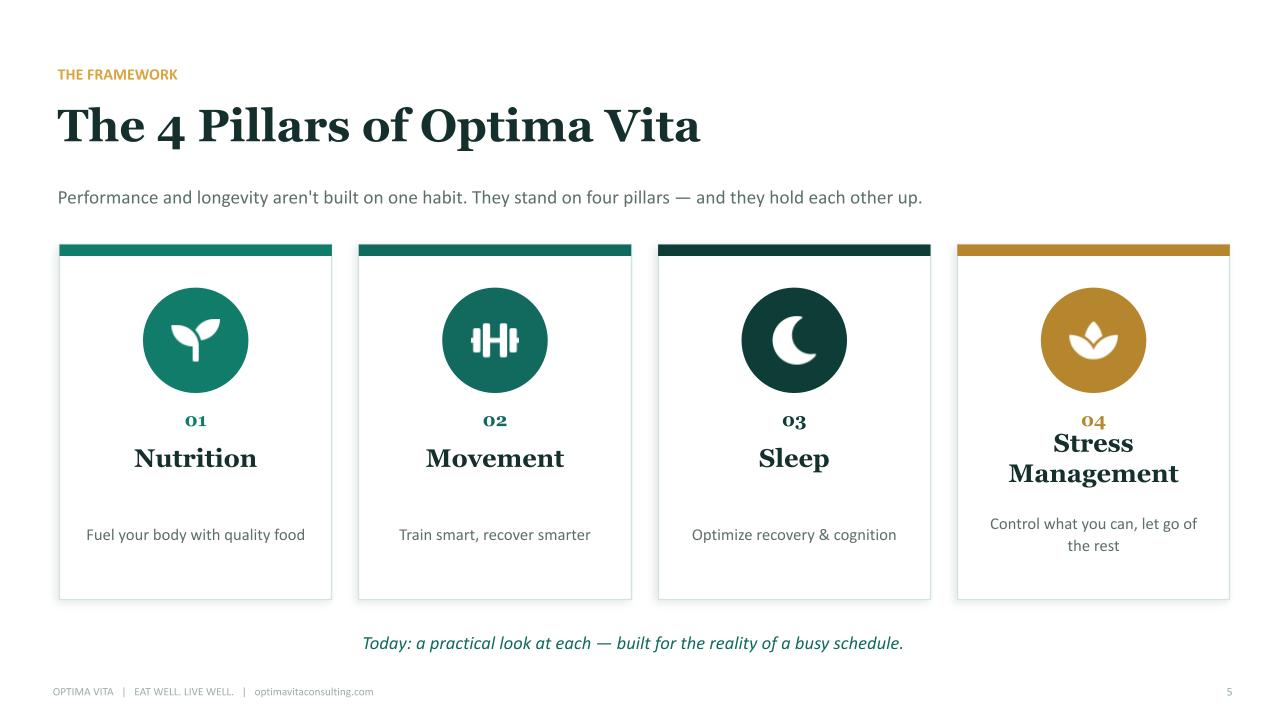
Meehan organizes everything under four pillars: nutrition, movement, sleep, and stress management. Each one is complex, and each one affects the others.
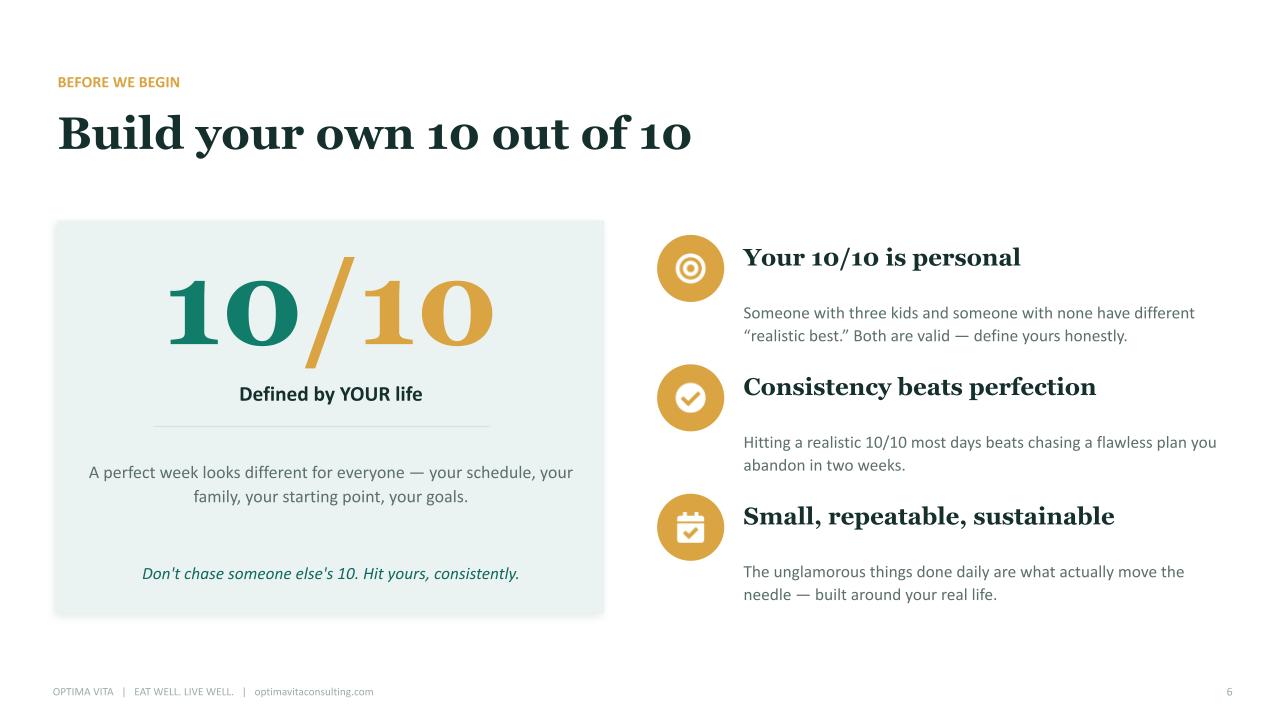
One important caveat before diving in: your 10 out of 10 isn’t anyone else’s. Someone with three kids and someone with none have very different “realistic bests.” The goal is to figure out what you can control in your circumstances — and be a 10 out of 10 in those controllables, consistently.
Pillar 1: Nutrition — Quality Over Calories
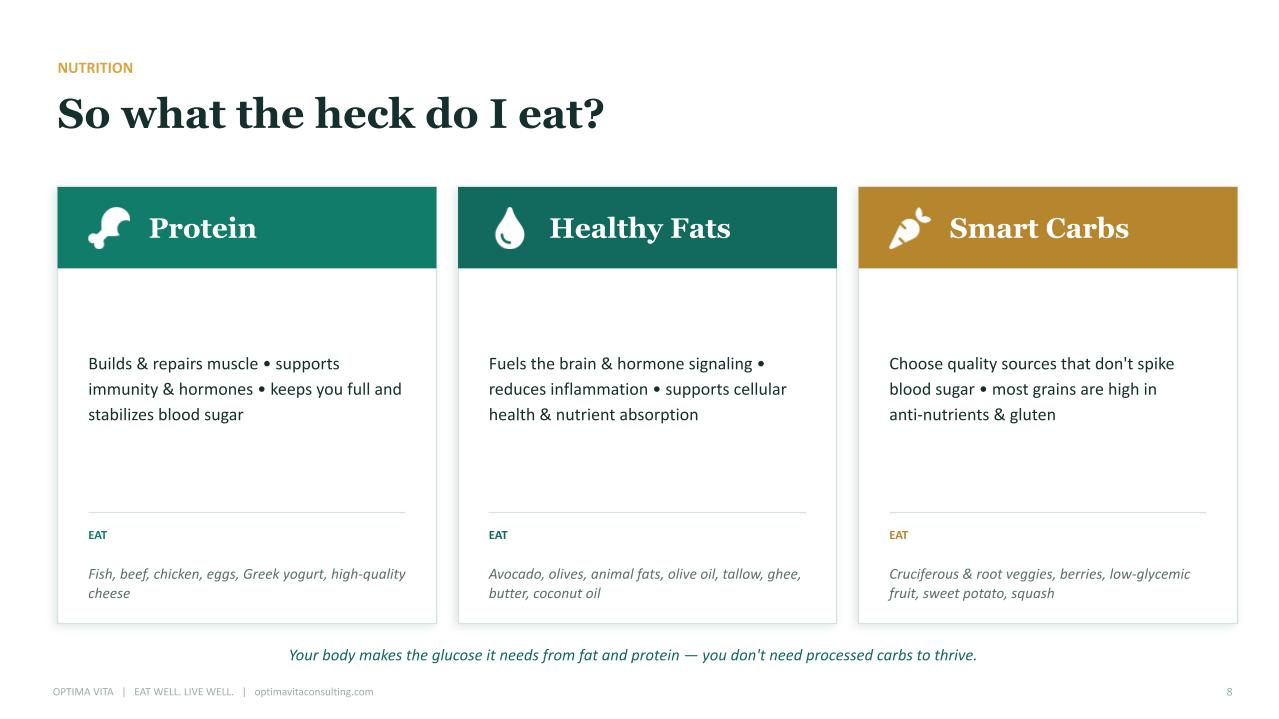
Start with protein
Protein does far more than build muscle. It supports immune function, mood regulation, and hormones — most hormones in the body are actually peptides, which are essentially broken-down proteins.
Meehan recommends prioritizing the most bioavailable sources: high-quality animal meats, fish, eggs, yogurt, and cheese. Quality matters enormously here. An egg from a pasture-raised hen foraging on grass and insects has a completely different nutrient profile than one from an industrial farm. Look for wild-caught fish, grass-fed beef, pasture-raised chicken and eggs, and grass-fed dairy.
Don’t fear healthy fats
Every cell in your body is wrapped in fat molecules — the fat you eat literally becomes your cellular membranes. Good choices include avocados, olives, olive oil (rich in polyphenols), and animal fats like tallow, ghee, and butter, which are stable for cooking thanks to their saturated fat content.
Be smart about carbs
There’s a massive gap between a healthy carb and an unhealthy one. Broccoli is a carb — but so is pizza dough. Build your base around low-glycemic vegetables, berries, squashes, and sweet potatoes, then scale up energy-dense carbs like bananas and rice based on your activity level. Training for a marathon? You’ve earned the rice. Sitting in meetings all day? Probably not.
Stop counting calories
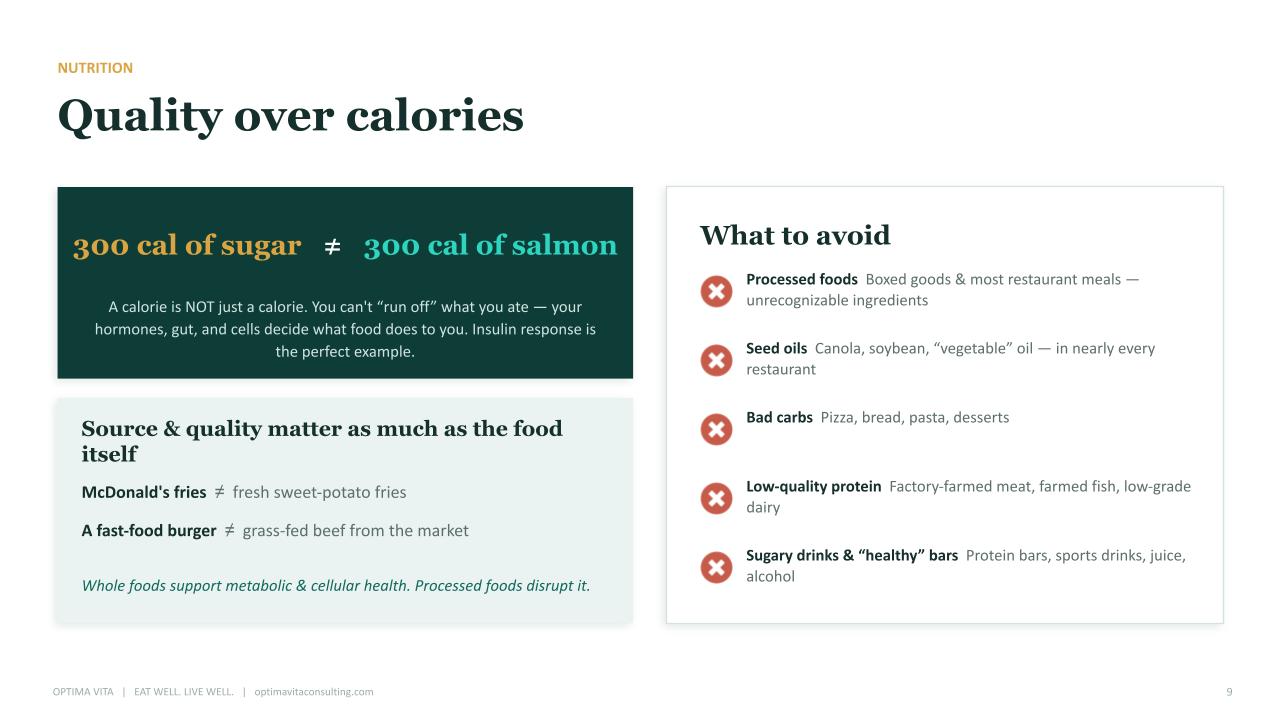
Meehan doesn’t have his clients count calories at all. It’s nearly impossible to track accurately, and more importantly, 300 calories of sugar is not 300 calories of salmon. What matters is quality, type, and timing. McDonald’s fries and homemade sweet potato fries cooked in butter aren’t remotely the same thing, even if the calorie counts match.
What to avoid
- Ultra-processed foods — anything in a box with a long ingredient list you can’t pronounce
- Industrial seed oils — canola, soybean, sunflower, and safflower oils, which are high in unstable polyunsaturated omega-6 fats and found in nearly every restaurant and packaged food
- Bad carbs — pizza, bread, pasta, desserts
- Low-quality protein — factory-farmed meat, farmed fish, conventional dairy
- Sugary drinks and “healthy” bars — most protein bars are loaded with the same bad oils and unhealthy carbs
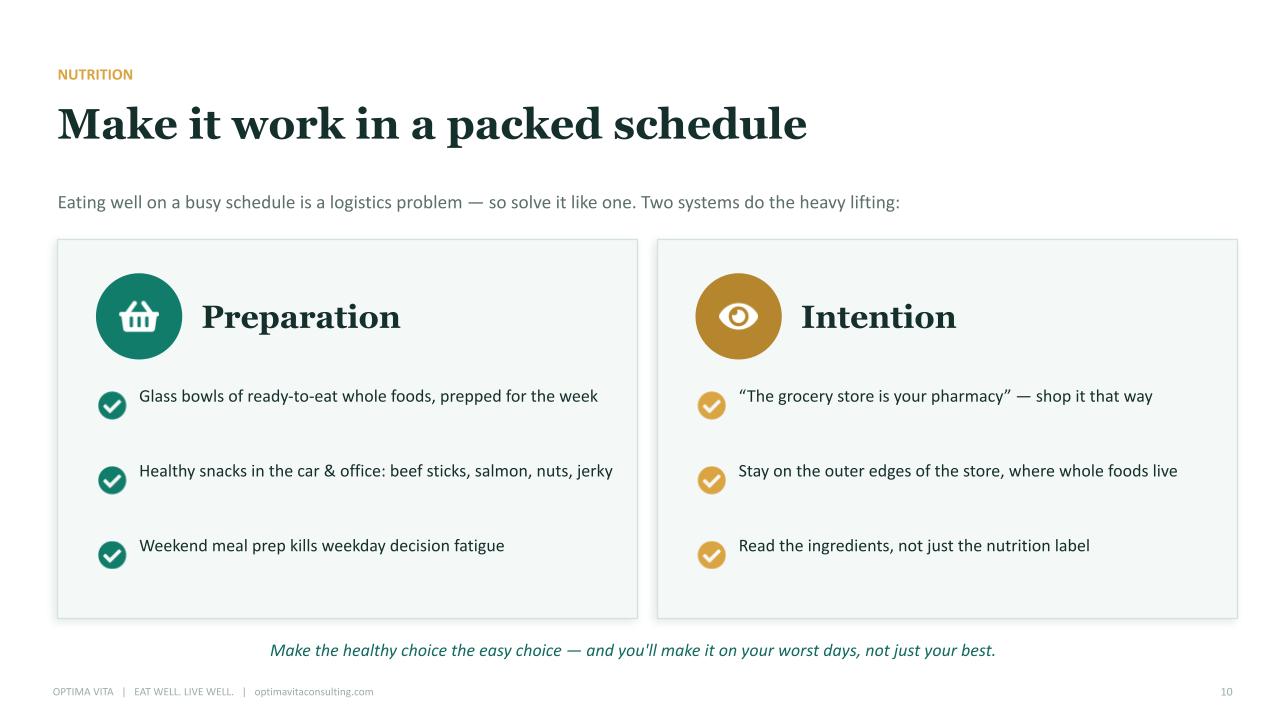
One rule of thumb: shop the outskirts of the grocery store, where the vegetables, fruit, meat, fish, eggs, and dairy live. And read the ingredients — “natural” means nothing, and “organic” canola oil is still canola oil.
Make it work in a packed schedule
Eating well when you’re busy is a logistics problem, so solve it like one. When you have a sliver of time, prep meals into glass containers — salmon, arugula, avocado — so something healthy is ready when the week gets chaotic. Keep satiating, blood-sugar-stable snacks in your car and office: grass-fed beef jerky and sticks, wild-caught salmon sticks, macadamia nuts, and fresh fruit.
Pillar 2: Movement — Train for Adaptation, Not Calories
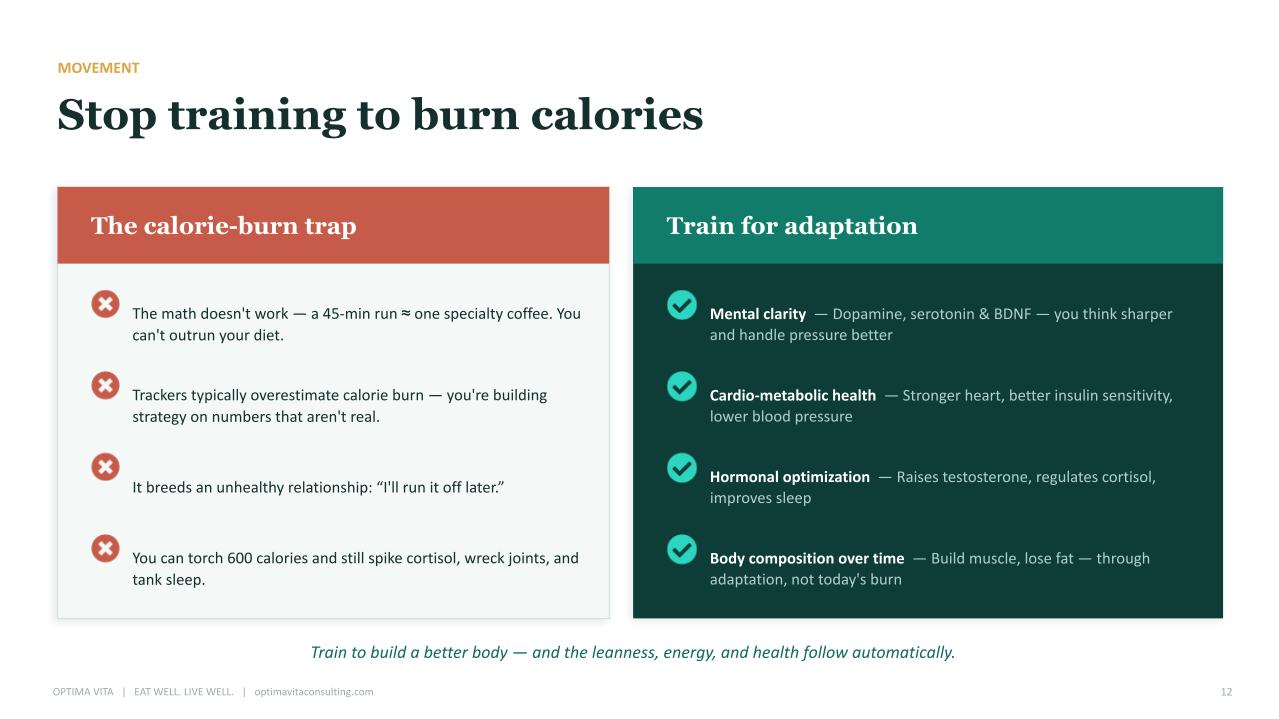
Just as Meehan rejects calorie counting in the kitchen, he rejects it in the gym. You can’t outrun a 400-calorie Starbucks drink with a four-mile run — the damage isn’t the calories, it’s the molecular signaling affecting your genes and cells.
Instead, think about the physiological adaptations you’re creating. When you lift weights, you’re tearing muscle apart so it can rebuild stronger — which means recovery, nutrition, and sleep are part of the workout. Exercise without recovery is really just aging your cells.
His recommendations:
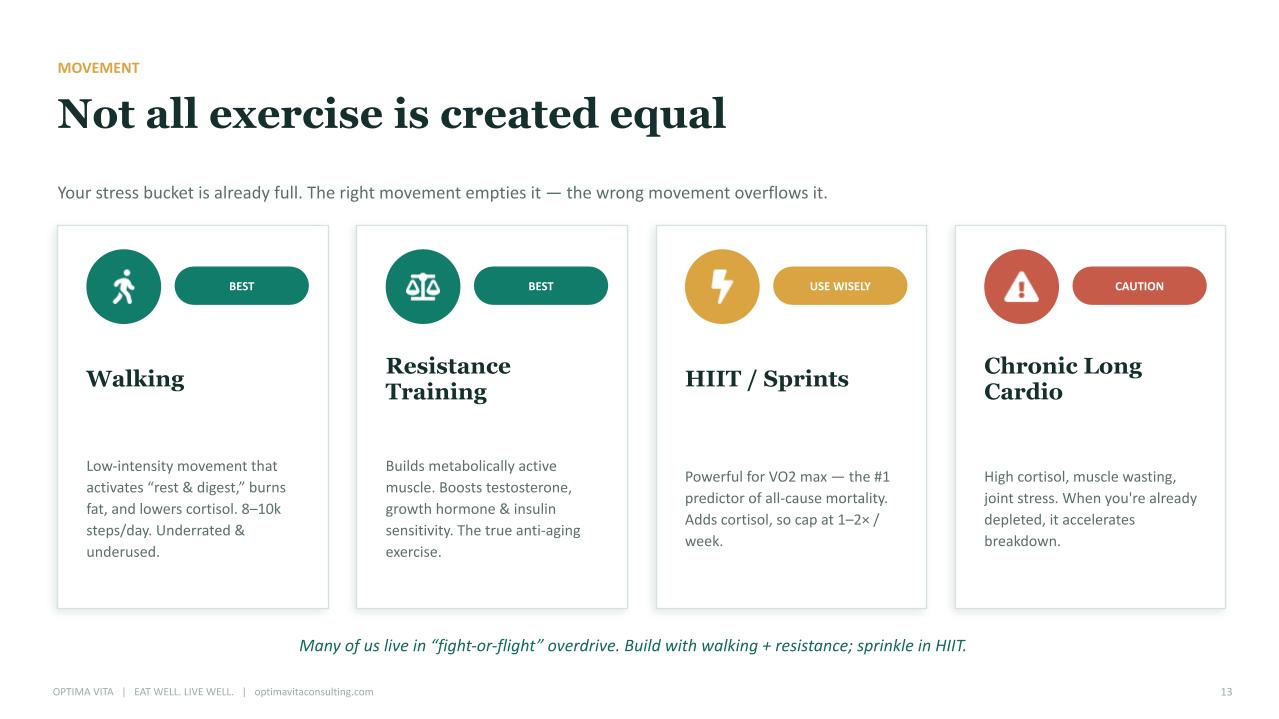
- Walking — low intensity, regulates cortisol, boosts mental clarity. The clinically supported target is 7,000+ steps per day (the famous 10,000 number actually originated as a marketing campaign, not science).
- Resistance training — at least two to three days a week. Muscle is a metabolically active organ that regulates blood sugar more than any other organ in the body and fights inflammation by releasing molecules called myokines. For fat loss, building muscle beats running, because more muscle means a higher resting metabolic rate.
- High-intensity intervals — Meehan’s favorite for adaptations like improved VO2 max. Think 20-second sprint, 1:40 walk, repeat. Cap it at once or twice a week.
- Caution on chronic long cardio — if you’re already stressed and stuck in a sympathetic “fight or flight” state, long-distance cardio can pile on more stress than your body can handle.
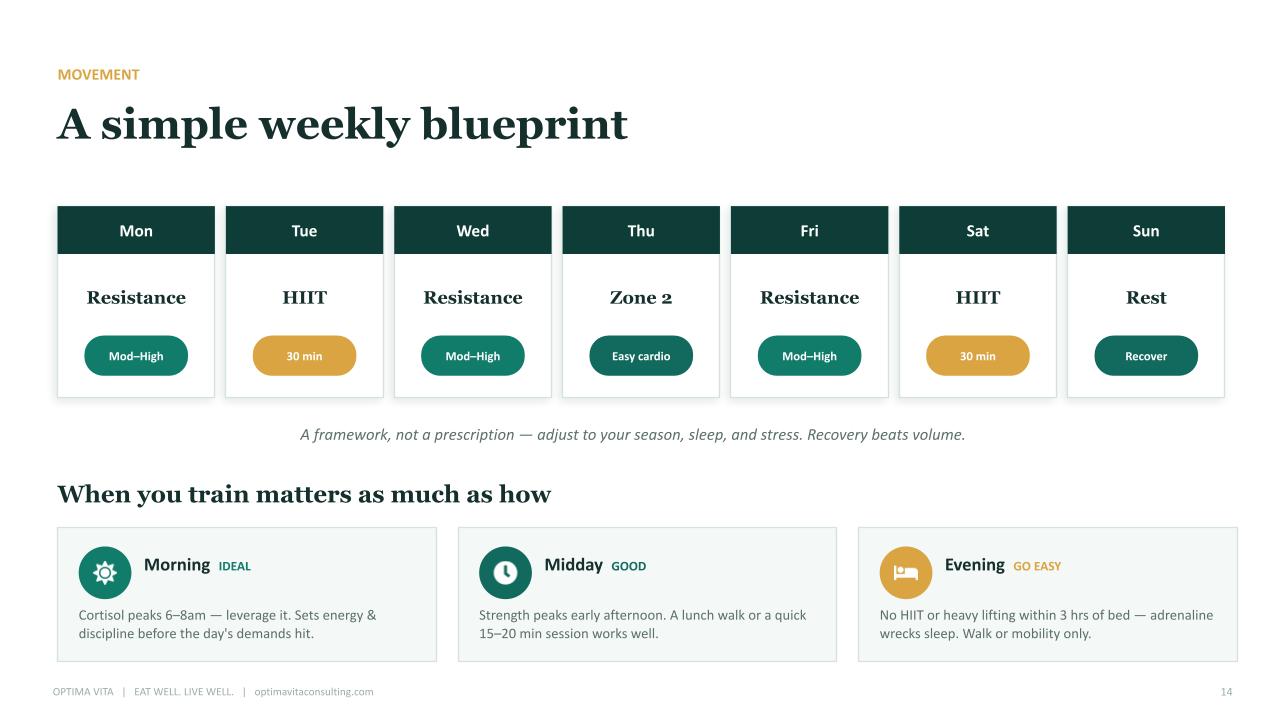
A sample week: resistance training Monday/Wednesday/Friday, HIIT a couple of days, some easy cardio, and at least one full rest day.
Timing matters too. Morning workouts leverage your natural cortisol peak. Midday is fine. In the evening, go easy — intense exercise too close to bed keeps your heart rate elevated and disrupts sleep.
Pillar 3: Sleep — The Most Vilified Pillar
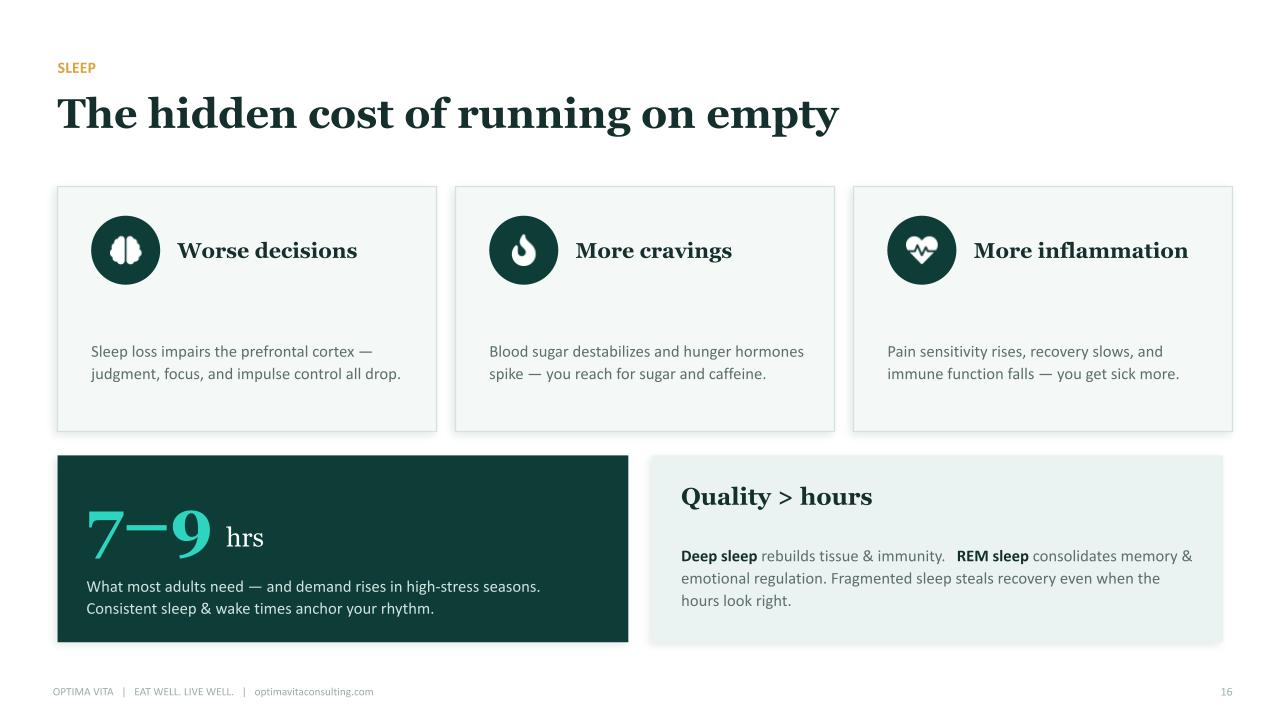
“Grind culture” has demonized sleep, but the science is unforgiving. Sleep drives cognition, hormone regulation (including the appetite hormones leptin and ghrelin), blood sugar control, and inflammation — including the glymphatic drainage that clears waste from your brain.
Even one hour less than your baseline can raise cortisol and blood sugar by roughly 20% the next day. That means you’re making decisions, managing people, and resisting the donut box from a compromised baseline.
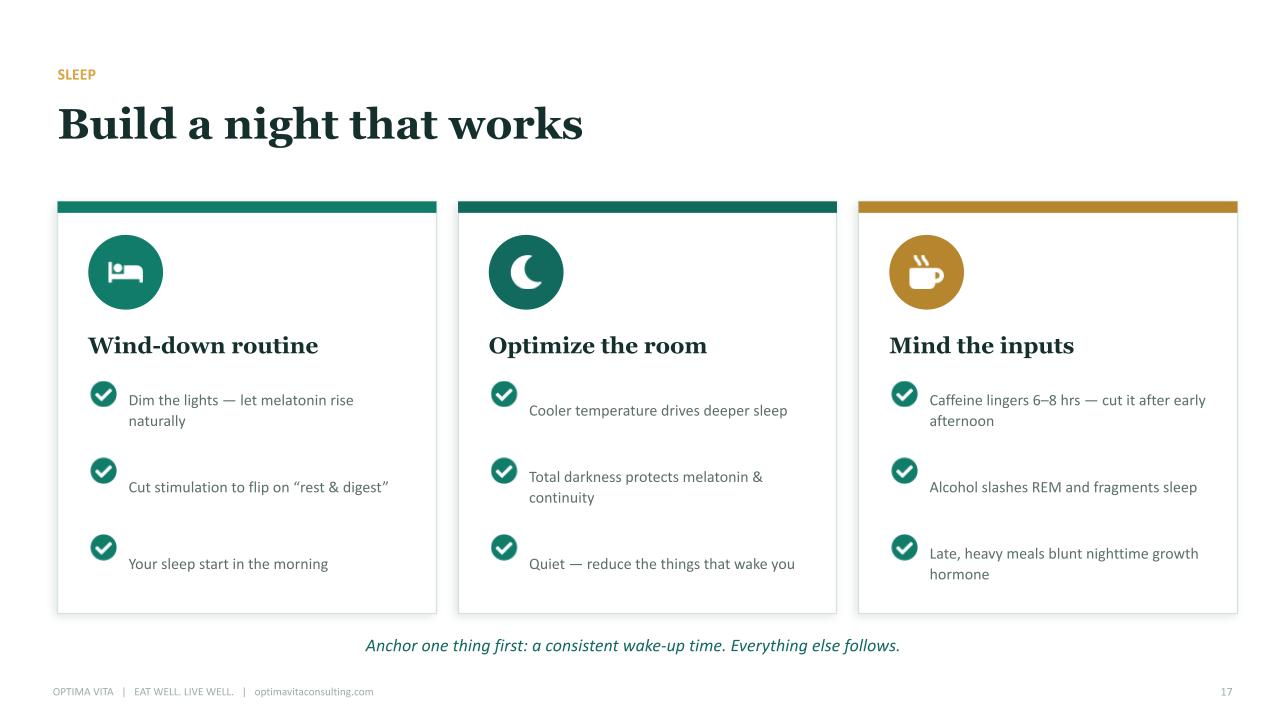
Target seven to nine quality hours. How to get there:
- Start in the morning. Sunlight in your eyes signals the suprachiasmatic nucleus in your brain, anchoring your circadian rhythm so melatonin and sleep pressure build properly at night.
- Protect the evening. Bright LED lights, screens, and late meals can undo your morning’s work by suppressing melatonin and disrupting deep sleep.
- Optimize the room. Cold, dark, quiet. Even a little light through the window can fragment your sleep.
- Mind the inputs. Caffeine has a half-life of five to six hours — a 5 p.m. coffee is still in your system at 3 a.m. (Bonus tip: delay your morning coffee 60–90 minutes after waking to let leftover adenosine clear, and you’ll avoid that afternoon crash.) Alcohol crushes sleep quality, and late, carb-heavy meals spike insulin and pull energy to your digestive system right when your body should be winding down.
Pillar 4: Stress Management — Regulate the Nervous System
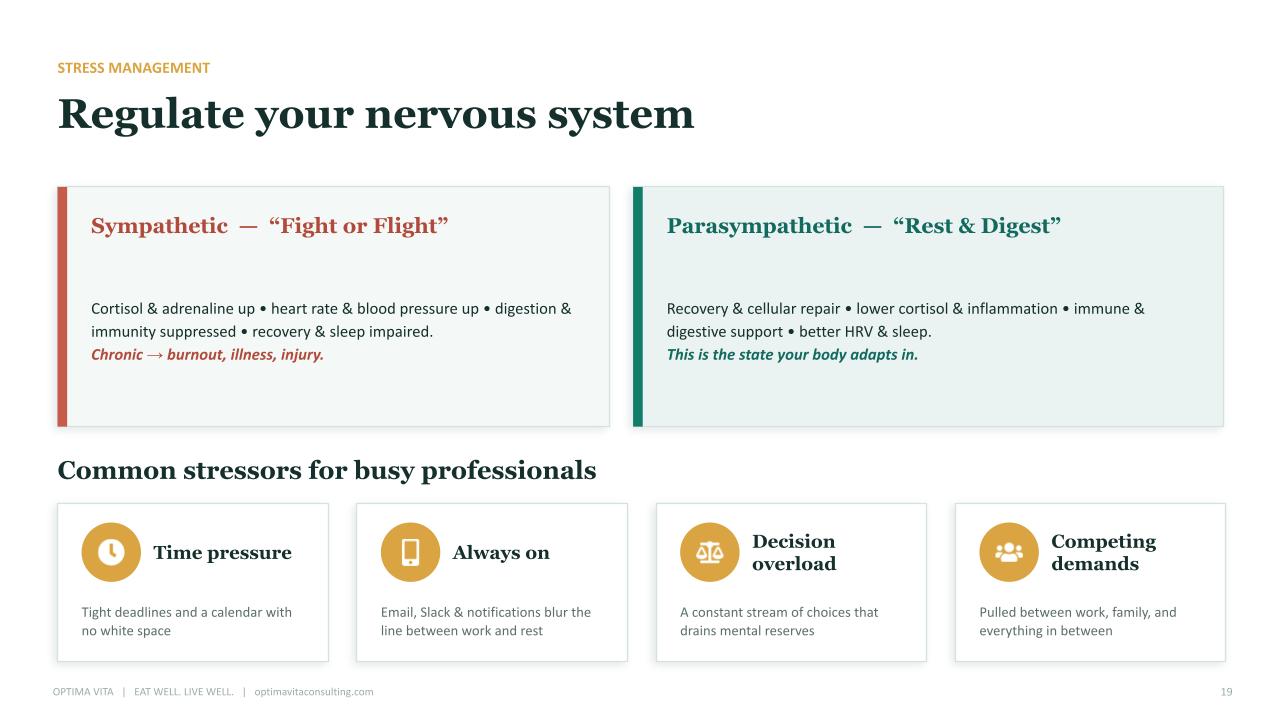
Busy professionals live with their sympathetic nervous system — “fight or flight” — switched on: deadlines, notifications, decision overload, competing demands. Chronic activation means elevated cortisol, suppressed immunity, impaired recovery, and eventually burnout.
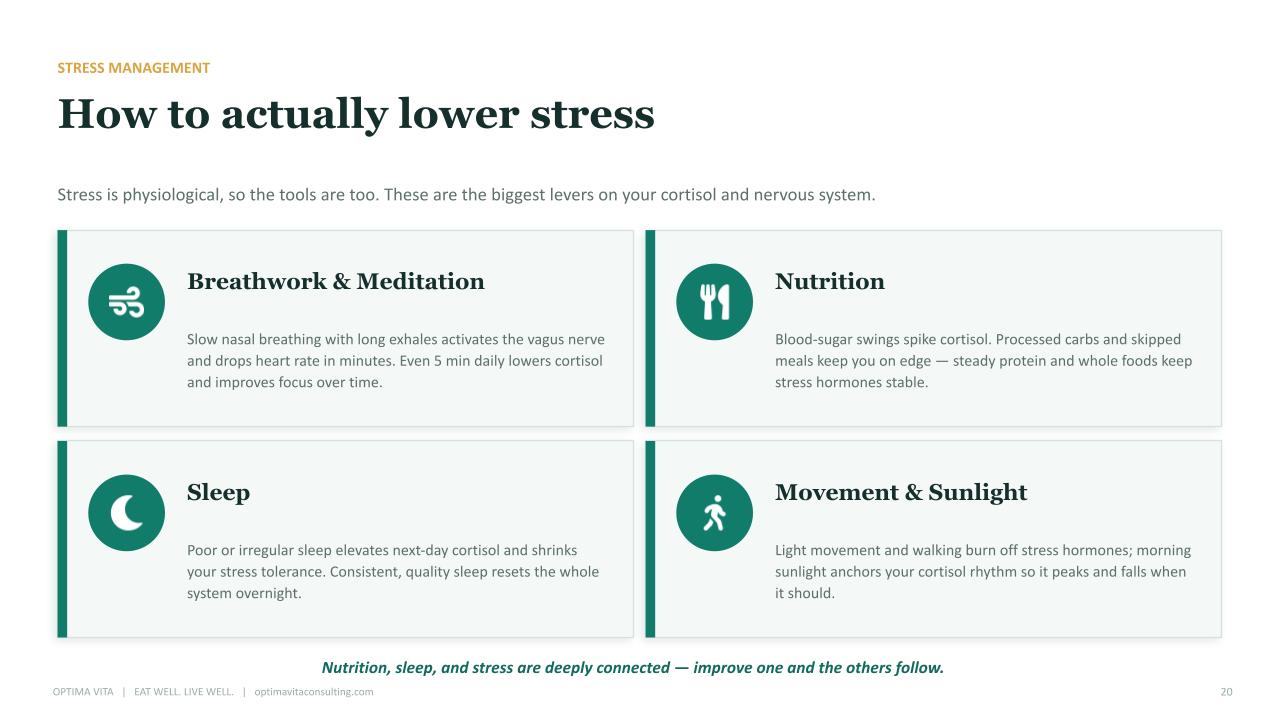
The fix isn’t complicated, and it overlaps with everything above:
- Breathwork and meditation — even five minutes a day, backed by hard biochemical science
- Nutrition — stable blood sugar means stable stress hormones
- Sleep — seven to nine hours is the foundation of cortisol regulation
- Walking and resistance training — both terrific for burning off stress hormones
Where to Start Tomorrow
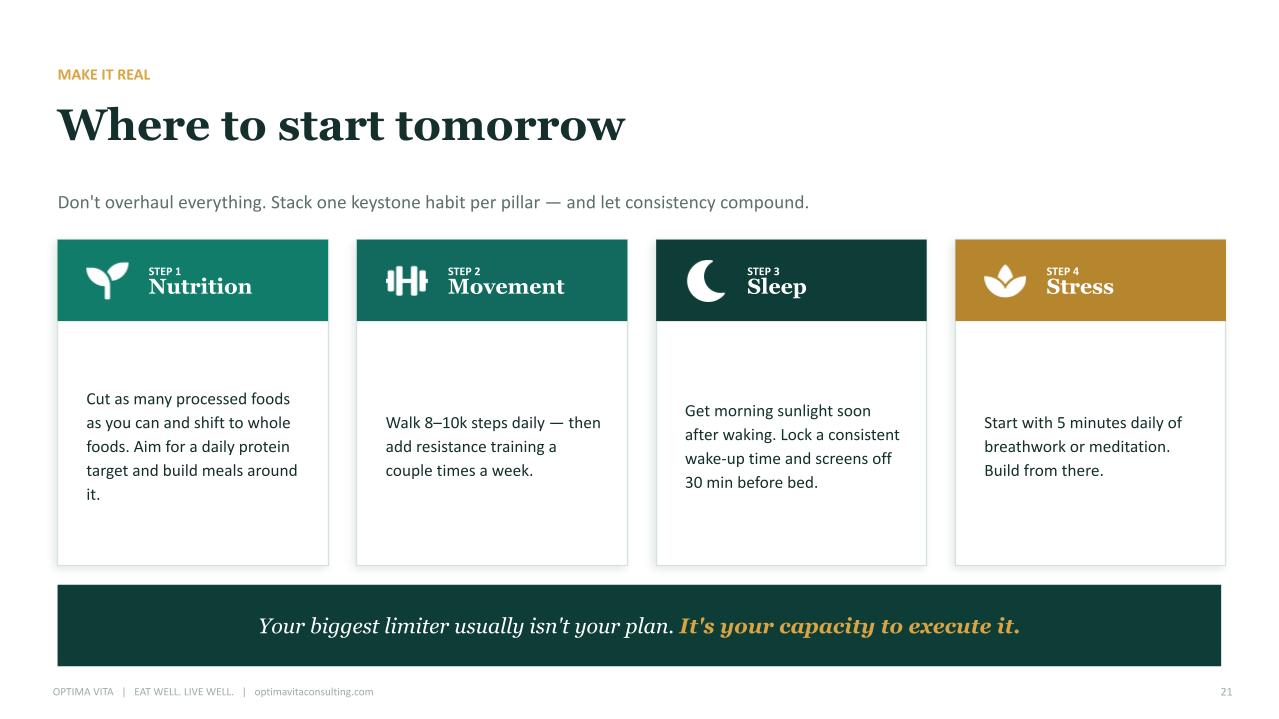
Don’t overhaul everything at once. Stack one keystone habit per pillar:
- Nutrition: Cut processed foods, shift to whole foods, and build meals around a daily protein target.
- Movement: Walk 8–10k steps daily, then add resistance training a couple of times a week.
- Sleep: Get morning sunlight, lock in a consistent wake-up time, and shut down screens 30 minutes before bed.
- Stress: Start with five minutes of daily breathwork or meditation.
Small, repeatable, and sustainable beats perfect every time.
Work with Optima Vita
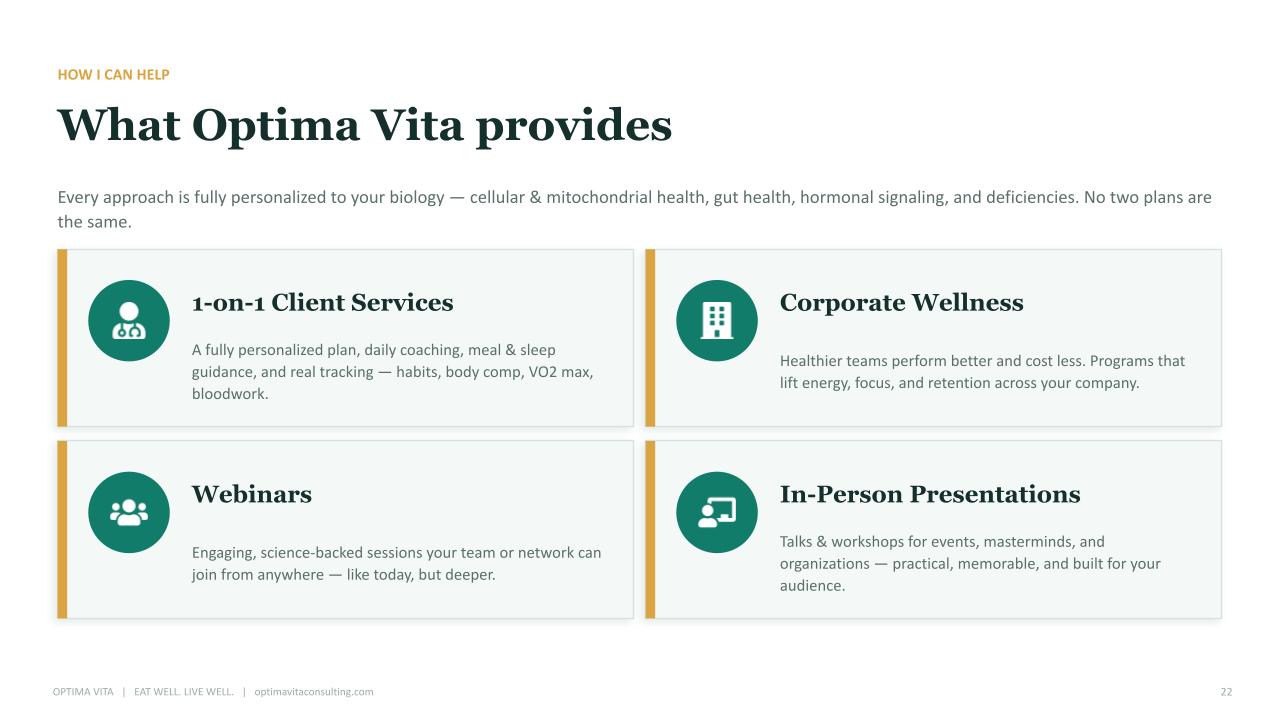
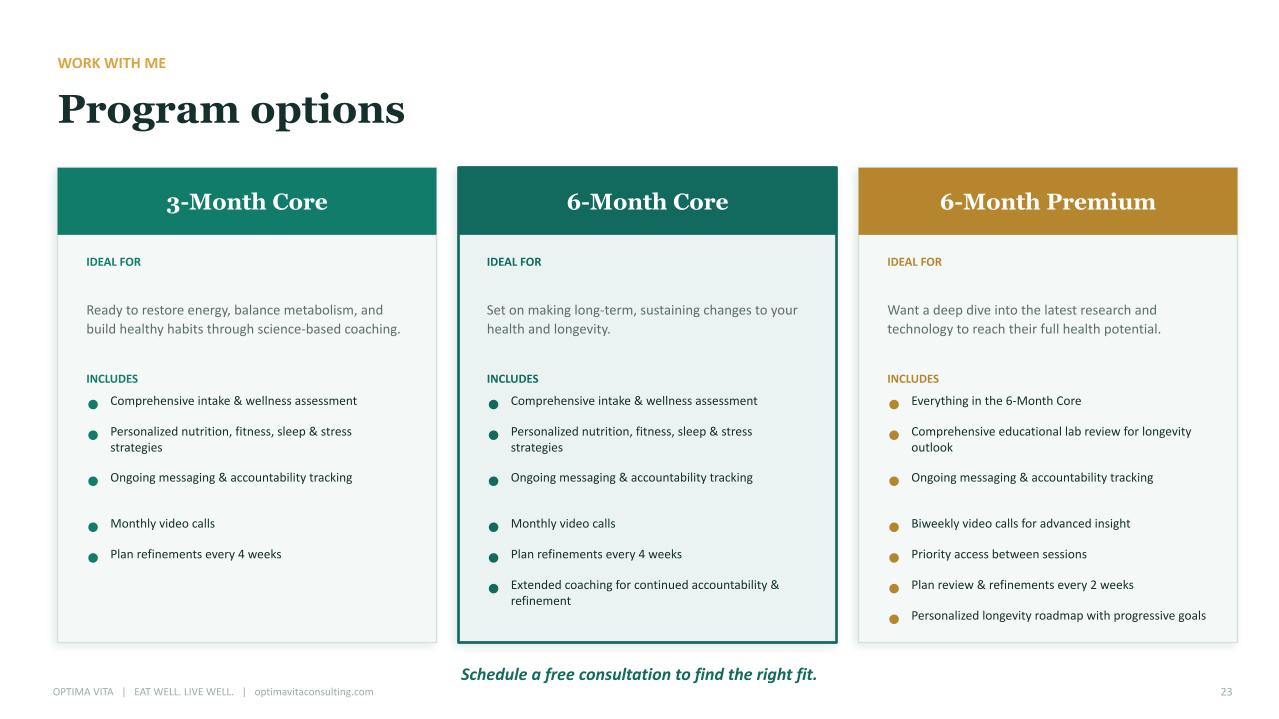
Optima Vita offers corporate wellness programs, in-person presentations and webinars, and comprehensive one-on-one coaching. Client programs include fully personalized nutrition, exercise, sleep, and stress management plans with daily feedback through the Optima Vita app — as Meehan puts it, “basically, we’re best friends for three to six months.” The premium program goes deeper into health and longevity, with blood testing across 100+ biomarkers, protocol implementation, and retesting at six months.
Learn more at OptimaVitaConsulting.com or follow Joe on Instagram for daily health tips.
Eat Well. Live Well.
Slide Deck


About the host:
Jeff Hamm is the visionary behind The Best of LKN – a media platform that has been spotlighting and promoting the most adored local small businesses and nonprofits in the Lake Norman area since 2020.
Jeff’s also an expert real estate broker who brings deep expertise in premium neighborhoods and strong ties to the region’s top builders, designers, and service providers.
Learn more:
www.LKNreal.com
www.BannerElkLiving.com
UPDATED FOR 2026!
Get the BEST of Lake Norman all in one place.
Download our
Lake Norman Visitors Guide
– FREE!