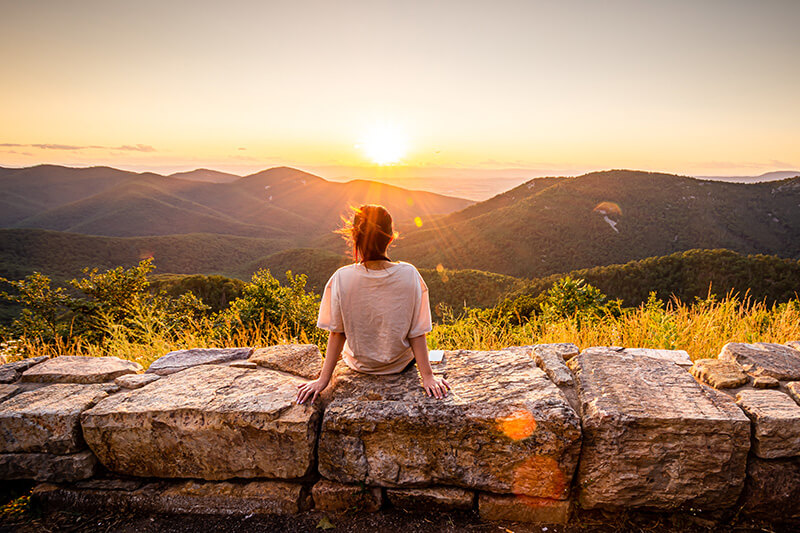
There’s a stretch of late July around here when the lake quietly stops helping. The water goes bathtub-warm. The dock boards get too hot to stand on barefoot. Even the shade feels like it’s running at about sixty percent.
That’s usually the week somebody in the group says we should go to the mountains — and then nobody does anything about it, because planning feels like work and the mountains feel far away.
They aren’t. That’s the whole point of this article.
Lake Norman sits at roughly 760 feet above sea level. Charlotte’s average July high is 90 degrees. Drive two and a half hours northwest to Banner Elk and that number drops to 77, with overnight lows around 59. Those are National Weather Service climate normals, not marketing copy, and they mean you can leave Cornelius after breakfast and be somewhere genuinely, physically cooler by early afternoon.
We’re leading with Banner Elk this year, and the reasoning is below. After that, ten more towns roughly ordered by how far you’ll drive to reach them — some easy day trips, some worth a whole weekend, and a few that need visitors more than usual right now.
One note before you go: western North Carolina is still rebuilding from Helene, and 2026 has brought a fresh round of road construction on top of that. Conditions change week to week. Everything below reflects what we could verify as of late July — but check befire you load the car.
1. Banner Elk
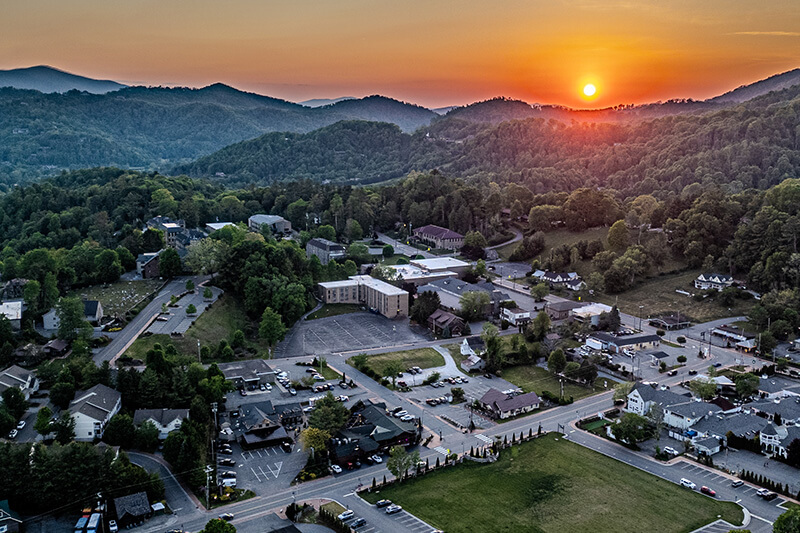
Most mountain towns make you choose. Banner Elk doesn’t — and that’s the whole argument.
Here’s the problem with planning a High Country trip: every town is good at one thing. One has the restaurants. One has the elevation. One has the water. One has the hiking. You pick, you drive, and you spend the weekend mildly aware of what you didn’t do.
Banner Elk sits at 3,701 feet in the middle of all of it. Beech Mountain — the highest incorporated town east of the Rockies — is ten to fifteen minutes up the road. Sugar Mountain is closer than that. Grandfather Mountain, Linville Falls, and Elk River Falls are all inside a half-hour radius. You can base yourself in one walkable downtown and reach four genuinely different mountain experiences without ever repacking the car.
And the town itself holds up as a destination, not just a parking spot.
The food is the surprise. Banner Elk brands itself the culinary hot spot of the High Country, which sounds like chamber-of-commerce language until you look at the actual bench for a town this size. LP on Main runs a serious Creole menu. Sorrento’s has been doing Sicilian family cooking long enough to have a second, more elevated dining room called Primo. Artisanal works out of a converted red-roofed barn with a farm-to-table menu that rotates with what’s coming out of nearby Springhouse Farm. Stonewalls has been grilling steaks since 1985. Add Bayou Smokehouse & Grill, Kettell Beerworks, and Banner Elk Winery and you have a town where dinner is a decision rather than a default.
There’s a lake here, too. Wildcat Lake is a free 13-acre public lake owned by Lees-McRae College, with a white sand beach, a swimming area, a fishing pier, a playground, and picnic shelters. Lifeguards are on duty Memorial Day through Labor Day via a program with the local YMCA, and there are canoe, kayak, and paddleboard rentals. It is, functionally, a small mountain version of what you already have at home — except the air is thirteen degrees cooler and you can wear a sweatshirt at dinner.
And there’s more going on than you’d expect. The town’s Summer of Music runs over a hundred live performances between Memorial Day and Labor Day, including free Thursday Concerts in the Park. Lees-McRae Summer Theatre puts on Broadway-style productions on campus. Art on the Greene turns the grounds of the Historic Banner Elk School into an open-air gallery four weekends a summer — the remaining 2026 dates are August 1–2 and September 5–6, both free. And Wilderness Run Alpine Coaster is North Carolina’s only alpine coaster, which is exactly the kind of thing that buys you goodwill with a bored eleven-year-old.
One more reason to go this year. Elk River Falls, about twenty-five minutes away near Elk Park, reopened in late May 2026 after an enormous Helene cleanup — the Forest Service and its contractors pulled more than 85,000 cubic yards of storm debris out of that corridor, including over a hundred cubic yards of tires. It’s a 50-foot waterfall at the end of a third-of-a-mile trail, and it is genuinely spectacular.
Practical info: Roughly two and a half hours from Lake Norman via US-321 to NC-105 and NC-184; add or subtract twenty minutes depending on whether you’re starting in Denver or Mooresville. July average: 77 high, 59 low.
Wildcat Lake: free, swimming Memorial Day–Labor Day when lifeguards are on duty; NC fishing license required if you’re fishing.
Restaurants: reserve ahead for July and August weekends — Artisanal and Primo in particular.
Elk River Falls: free, in the Appalachian Ranger District of Pisgah National Forest, about 12 miles from town via NC-194 and US-19E.
Learn more about Banner Elk at www.bannerelkliving.com .
2. Beech Mountain
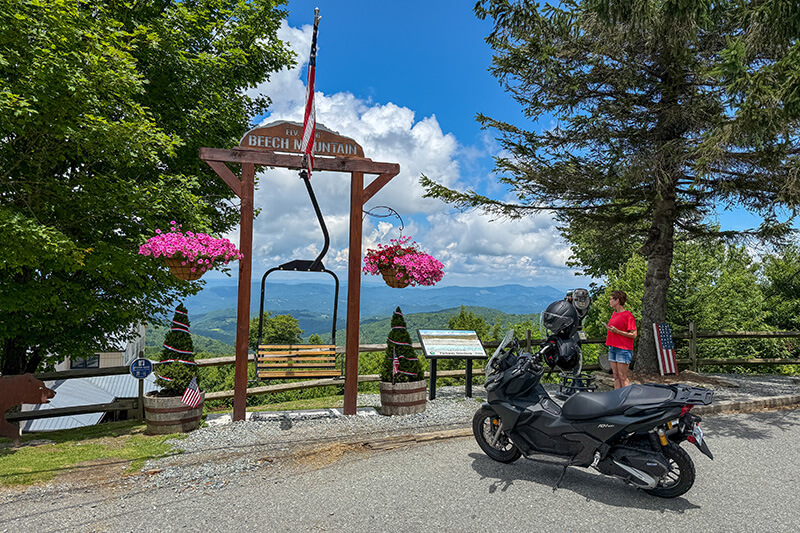
Fifteen minutes from your Banner Elk basecamp, and about ten degrees down.
At 5,506 feet, Beech Mountain is the highest incorporated town east of the Rockies, and in July that stops being trivia and starts being the reason you drove up there. Summer highs sit in the low 70s. Nights require a jacket, no exceptions.
The ski resort keeps its chairlift running through the warm months, which delivers you to the 5506′ Skybar — a glass roundhouse on the summit deck with Adirondack chairs, craft beer from Beech Mountain Brewing Co., and views reaching into Tennessee and Virginia on a clear day. You do not have to hike, bike, or exert yourself in any way. Ride the lift up, sit down, let the elevation do the work. There’s live music on Saturday afternoons.
For people who want to earn it, the resort runs a lift-served downhill mountain bike park on weekends from mid-June into early September, with rentals and trails ranging from mellow green flow lines up to black terrain that has hosted national competitions. The Emerald Outback trail system at the summit adds about seven miles of hiking and riding with long-range overlooks in several directions.
Practical info: Fifteen minutes from Banner Elk, about two and a half hours from the lake if you’re coming straight up. Summer operations at the resort are weekend-weighted rather than daily — check the calendar before you build a whole day around the bike park. Bring layers even in August.
3. Blowing Rock
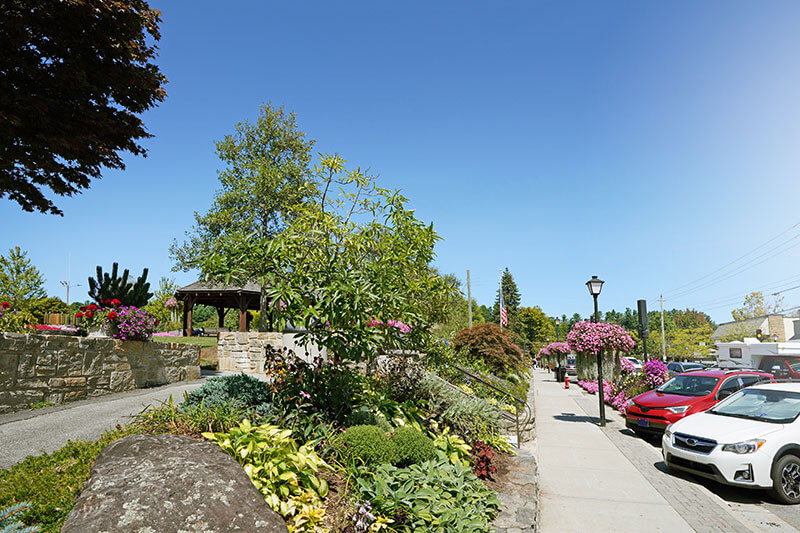
If you’ve never done a mountain day trip from the lake, start here.
Blowing Rock is about two hours from most of Lake Norman, and it’s the rare mountain town where the good stuff is walkable. Main Street runs a few compact blocks of galleries, ice cream, and restaurants, with Memorial Park in the middle of it like a town square that actually gets used. Average July high: 77. Average low: 60.
The must-do is Bass Lake, a flat one-mile loop at the base of Moses H. Cone Memorial Park. Smooth gravel, stroller-friendly, wheelchair-friendly, lined with lily pads and enough shade to make a midday walk pleasant. Free, no reservation. Up the hill sits Flat Top Manor, the Cone family’s twenty-room summer house, now home to the Parkway Craft Center where regional artisans sell pottery and woodwork.
Families with young kids should build the day around Tweetsie Railroad instead. It’s North Carolina’s original theme park, centered on a narrow-gauge steam locomotive, and it has aged into something charming rather than dated. Buy tickets online ahead — summer weekends sell out. Insider move: arrive after 3 p.m. and your ticket is good for the next day too.
Practical info: Bass Lake trailhead is off US-221 just south of town; parking fills by mid-morning on weekends. Tweetsie is on US-321 between Blowing Rock and Boone, and parking is free. 2026 heads-up: the Blue Ridge Parkway is under construction near Blowing Rock through fall, with staggered closures. Cone Manor, Price Lake, and Rough Ridge stay reachable from one direction or the other, but check the Parkway’s road status page the morning you leave.
4. Boone
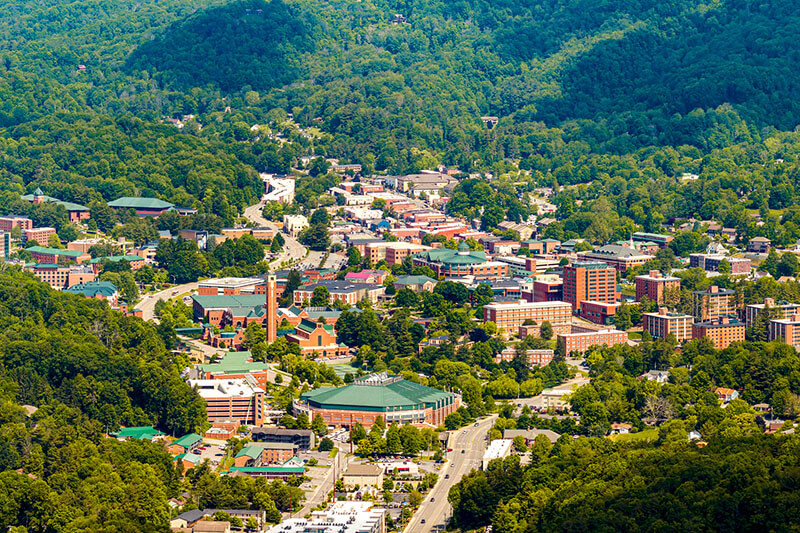
Boone is what happens when a mountain town also has a university, and the mix works better than it has any right to.
Ten minutes from Blowing Rock, Boone runs about 79 degrees in July with lows near 58 — and with Appalachian State in town, there’s a density of coffee shops, breweries, bookstores, and cheap good food that smaller mountain towns can’t sustain. King Street is the spine of it. The original Mast General Store is eight miles away in Valle Crucis and worth the detour as a piece of retail archaeology (the candy barrels alone justify the drive).
The summer move in Boone is water. The New River — which, despite the name, is one of the oldest rivers on earth — runs cool and slow enough for tubing, and several outfitters run shuttle-and-float trips that take a couple of hours and require zero skill.
Why this one matters for us: Boone is the closest thing to a full-service town within two hours of the lake. If you want a trip where nobody has to plan much — show up, park, wander, eat, figure it out — Boone absorbs an unstructured day better than anywhere else on this list.
Practical info: Two hours from Mooresville via US-421, a little longer from Denver. Tubing outfitters generally run Memorial Day through Labor Day and depend on water levels, so call the morning of. Downtown parking is metered and enforced.
5. Linville and Grandfather Mountain
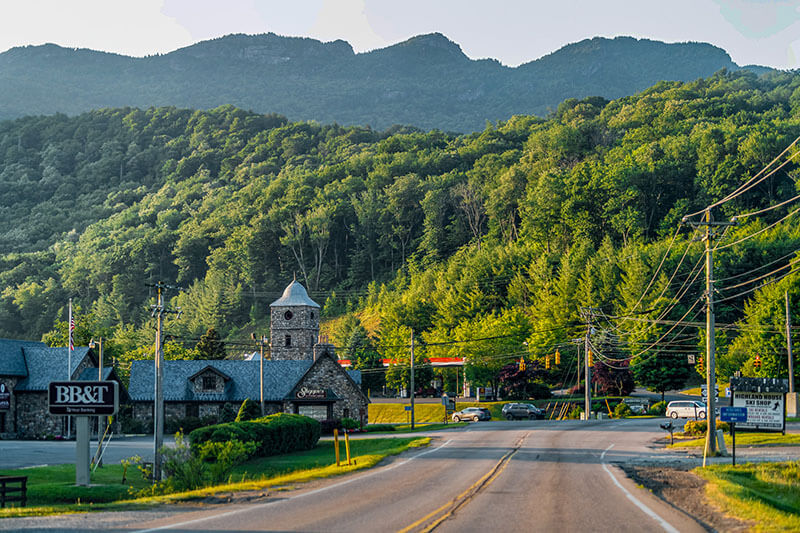
Grandfather Mountain averages 72 degrees in July. That’s an eighteen-degree drop from Charlotte, and it is not subtle when you step out of the car.
The Mile High Swinging Bridge is the headline — a suspension footbridge at 5,280 feet that sways just enough to be memorable without being alarming. The attraction also runs wildlife habitats and a nature museum, which makes it one of the few spots here that works for a multi-generation group where not everyone wants to hike.
Nearby, Linville Falls remains one of the more dramatic waterfalls accessible from the Parkway, with overlook options ranging from a short easy walk to a steeper scramble for gorge views.
Here’s the honest part: this is where Helene hit the Parkway hardest, and repairs are ongoing. The spur road to Linville Falls is open. The campground and picnic area there are not. And the Parkway is closed for long stretches immediately south of Linville toward Mount Mitchell. You can absolutely visit — you just can’t string it into the leisurely Parkway drive you might be picturing.
Practical info: Roughly two hours from the lake, and twenty-five minutes from Banner Elk if you’re already up there. Grandfather Mountain charges admission and uses timed entry in peak season, so reserve online. Bring a layer; 72 degrees with wind at a mile high feels colder than the number suggests.
6. Chimney Rock and Lake Lure
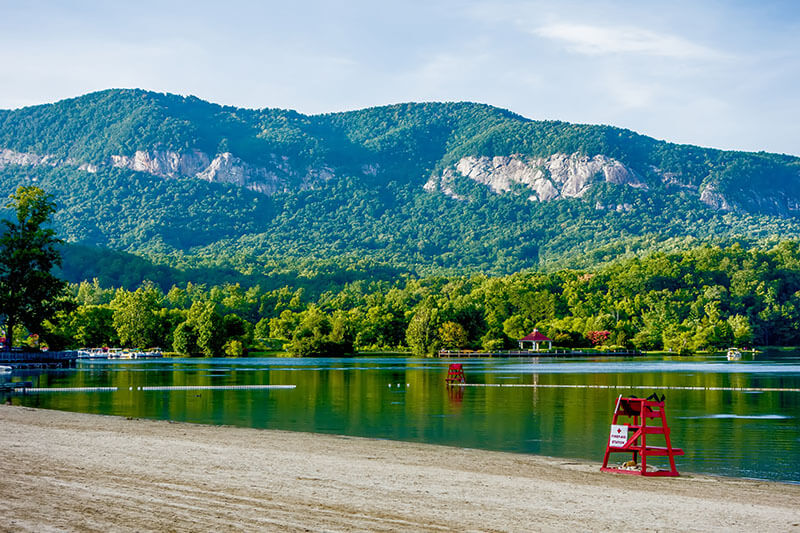
Of everywhere on this list, this is the one to prioritize if you only make one trip.
Helene tore through the Rocky Broad River gorge and destroyed roughly a third of the businesses in Chimney Rock Village. The park’s stone entrance bridge washed away entirely. For a while it was genuinely unclear whether the village would come back.
It has. Chimney Rock State Park reopened in June 2025 via a temporary bridge and now runs seven days a week on timed-entry reservations. The village held its official reopening on the one-year anniversary of the storm, and most of the destroyed businesses have rebuilt. And in May 2026 — twenty months after the storm — Lake Lure itself reopened to boaters and swimmers, after the Army Corps of Engineers removed more than a million tons of sediment and debris from the water.
For a Lake Norman audience, there’s something worth sitting with there. Another lake community, ninety minutes away, lost its lake for two years and got it back.
The Lake Lure beach reopened Memorial Day weekend. The original water slides didn’t survive the storm, so a floating adventure course took their place. The elevator up through the mountain to the top of Chimney Rock still runs, and the view over the lake from the top is the same one that’s been selling this place for 110 years.
Practical info: Under two hours via US-74.
Chimney Rock State Park: timed-entry reservations required at chimneyrockpark.com; village parking is $5/day near the Chimney Rock Smokehouse.
Lake Lure Beach: 2724 Memorial Hwy, open daily 10 a.m.–6 p.m. through August 11, 2026; $12 adults, $9 seniors, $8 kids 4–12.
Two important notes: NCDOT began highway reconstruction through downtown Chimney Rock on July 6, so expect delays and park at the western edge of the village. And the Rocky Broad River is still an active recovery area — the town asks visitors to stay out of it.
7. Black Mountain
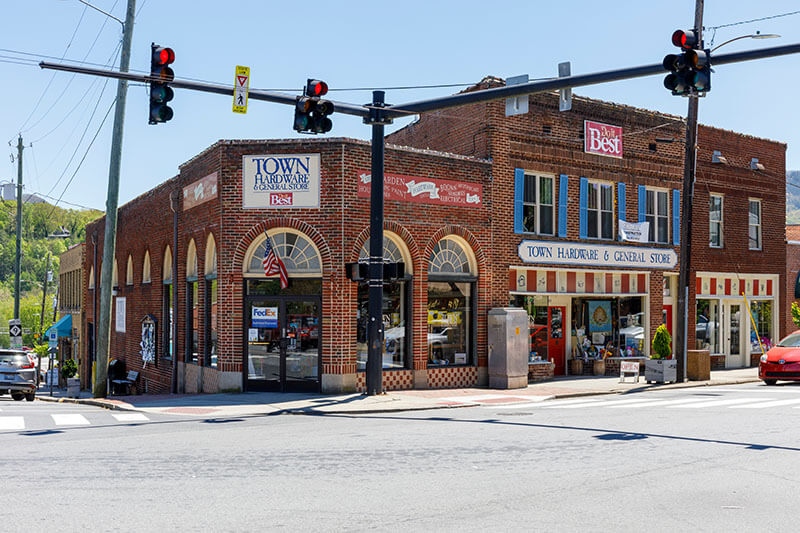
Black Mountain is where you go when you want the mountain-town experience without circling for parking.
It sits twenty minutes east of Asheville at 2,400 feet, and it has managed something rare: a downtown that’s genuinely charming and genuinely functional at the same time. Antique shops, a good bookstore, breweries, and a walkable grid you can cover in an afternoon without a plan. The Seven Sisters ridgeline forms the backdrop for basically every photo you’ll take.
The strategic argument is lodging. Stay here and you’re twenty minutes from Asheville’s restaurants while paying meaningfully less and skipping the parking-deck tax.
You’re also positioned for the drive to Mount Mitchell — which deserves its own paragraph, because the access situation trips people up. At 6,684 feet it’s the highest point east of the Mississippi, and you can drive nearly to the summit. But the Parkway north of the park is still closed for Helene repairs, which means the only way in is from the Asheville side. State Parks warns visitors to fuel up for a 70-mile round trip, because there are no gas stations between Asheville and the summit. Expect dump truck traffic, a 35 mph limit, and delays; recovery crews are actively using that road.
Practical info: About two hours via I-40. Mount Mitchell State Park is free and open daily 9 a.m.–5 p.m. April through October; entrance at Parkway milepost 355.4, then 4.5 miles to the summit lot.
8. Asheville
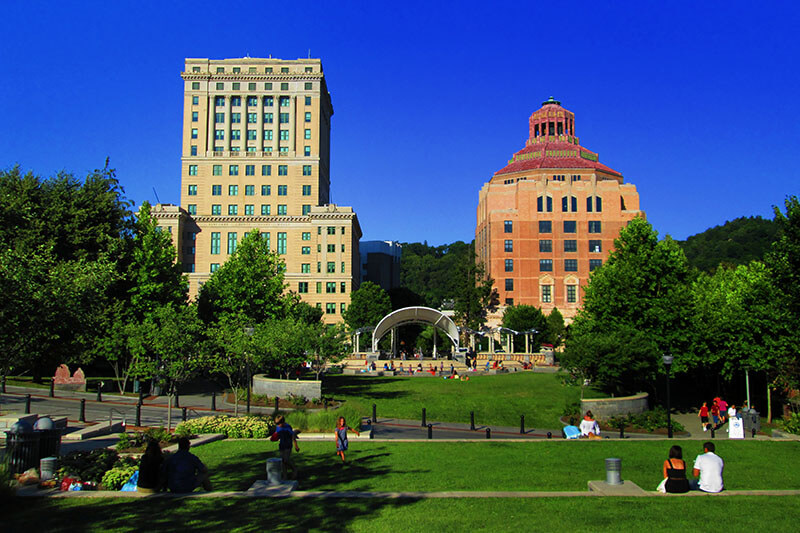
Let’s be straight about this one: Asheville is the least “cool” town on this list.
Its July average high is 86 degrees — only four below Charlotte. Asheville sits in a river valley at about 2,100 feet, and the elevation math that makes Beech Mountain feel like a different climate simply doesn’t apply. If your only goal is escaping heat, there are better options above.
Go anyway, for everything else. The Biltmore Estate, the breweries, the River Arts District, a food scene punching several weight classes above the city’s size. And go especially this year, because Asheville has spent two years fighting a perception problem. Tourism officials have said plainly that people outside the region still picture a disaster zone, and that misconception has real consequences for businesses that rebuilt and reopened and are now waiting on customers who assume they’re closed.
They are not closed. Some relocated a few blocks or a few miles, but the city is open and functioning.
The move for heat-averse visitors is a schedule adjustment: mornings and evenings outdoors, afternoons indoors at the museums, galleries, and taprooms. Or use Asheville as a basecamp and drive up to Craggy Gardens when the valley heats up — you’ll gain 4,000 feet and about fifteen degrees in under an hour.
Practical info: Just over two hours via I-40. Book Biltmore tickets in advance for summer weekends. Downtown parking decks are your friend; street parking downtown is a losing game.
9. Brevard
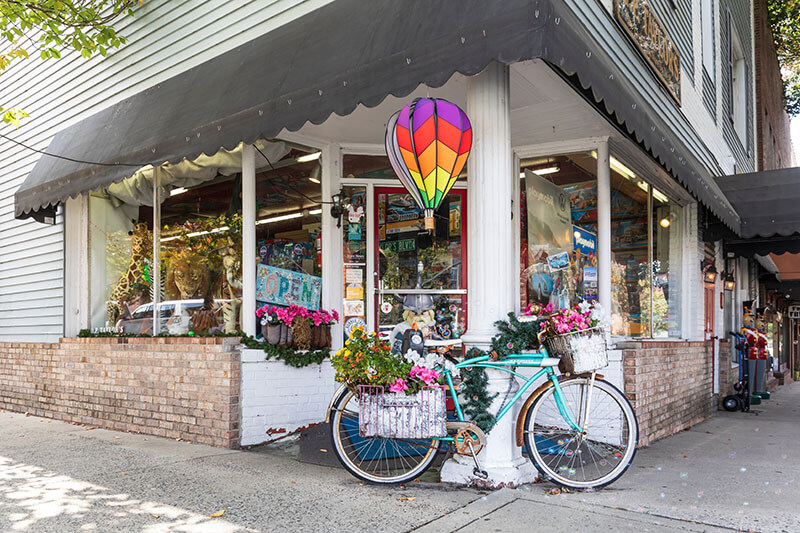
If cooling off is the mission, Brevard is the most direct route to accomplishing it.
Transylvania County markets itself as the Land of Waterfalls, and the claim holds up — this is the densest concentration of accessible falls in the state. Brevard itself is a pleasant small town at 2,200 feet with a music festival, a walkable downtown, and a population of white squirrels that residents take very seriously.
But you’re here for the water. Sliding Rock is the famous one: a 60-foot natural rock slide in Pisgah National Forest with roughly 11,000 gallons a minute running over it, ending in an eight-foot pool. The water is 50 to 60 degrees. This is not a gentle introduction to anything, and that’s the appeal. It’s also the only swimming hole in the region with lifeguards on duty in summer.
DuPont State Recreational Forest, between Brevard and Hendersonville, is the other half of the day. The classic three-mile loop hits Hooker, Triple, and High Falls on wide, well-graded trails — Triple Falls is the one from the first Hunger Games, and you can stand on the flat rock in the middle of it. Hooker Falls has a swimmable pool at the base.
Practical info: About two and a half hours via I-85 and I-26. Sliding Rock: 1600 Pisgah Highway, Pisgah Forest; $6 per person, ages 5 and under free; open 9 a.m.–6 p.m. daily, lifeguards Memorial Day through Labor Day. Closes temporarily for lightning and high water. DuPont: free, open 5 a.m.–10 p.m., visitor center and restrooms at the High Falls parking area. Both lots fill by late morning on summer weekends — arrive before 10 or after 4.
10. Waynesville and Maggie Valley
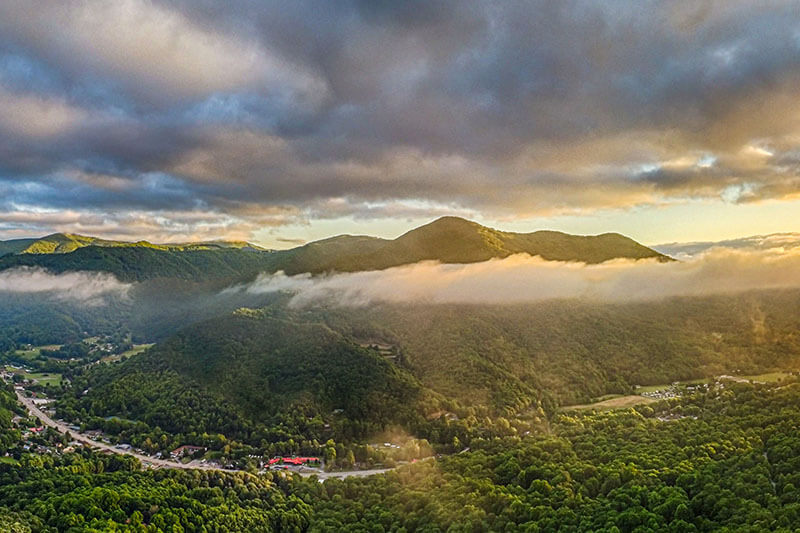
Push past the three-hour mark and the payoff is the Great Smoky Mountains.
Downtown Waynesville is the most underrated Main Street in western North Carolina — brick sidewalks, a serious gallery scene, another Mast General Store. Maggie Valley, fifteen minutes west, is looser and more roadside-Americana, and it’s home to Wheels Through Time, a museum of rare American motorcycles that converts skeptics with impressive reliability. Open April through November.
The reason to make the drive, though, is Cataloochee Valley. Elk were reintroduced to this corner of the Smokies in 2001 after being wiped out of the eastern United States in the 1800s. The initial herd of about 52 has grown to roughly 200, and on a summer evening you can stand on an open valley floor and watch them graze in front of restored 19th-century homesteads and churches.
Two things to know. First, timing: dawn and dusk are when the elk are active, though cloudy days and post-storm afternoons work too. Second, the road: Cove Creek Road is a steep, narrow, ten-mile mountain road with an unpaved section, and once you turn off US-276 there is no gas, no food, and no cell service. It isn’t dangerous, but it isn’t a road you want to discover unexpectedly at dusk.
Practical info: Waynesville is roughly two hours forty-five from the lake, Maggie Valley about three. Bring a picnic to Cataloochee and plan to tailgate — that’s the traditional approach and there’s nowhere to buy anything.
11. Highlands
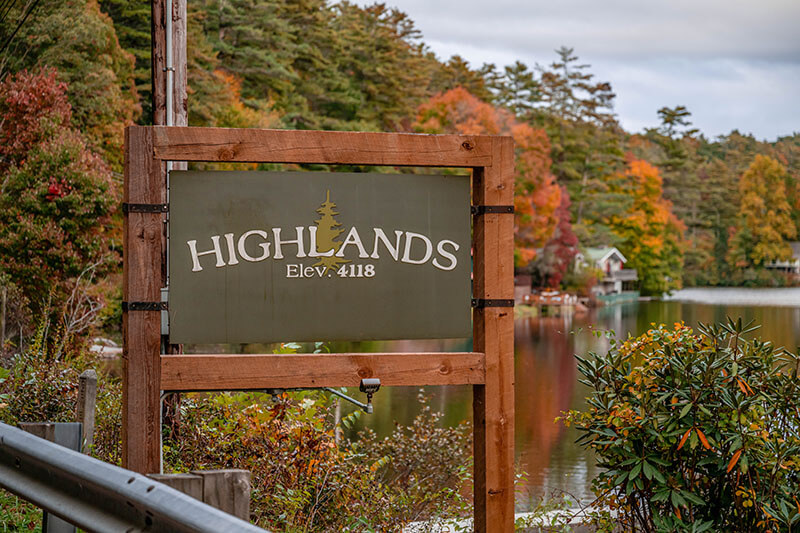
Highlands sits at 4,118 feet on the Highlands Plateau, averages 78 degrees in July, and has never once pretended to be a budget destination.
That’s the honest framing. This is the most upscale town on the list — fine dining, serious galleries, high-end lodging, and a summer population that swells with families who’ve been coming for generations. It’s about three hours out, which puts it in weekend territory rather than day-trip range.
What you get for the drive and the money is a plateau ringed by waterfalls you can practically park at. Dry Falls lets you walk underneath the flow on a paved path. The nearby Cullasaja Gorge is one of the more spectacular stretches of road in the state, and it’s worth driving slowly.
Cashiers, ten miles east, is the slightly less formal sibling and worth pairing into the same trip.
Practical info: Roughly three hours via I-85 and US-64. Reserve dinner well ahead in July and August. US-64 through the Cullasaja Gorge is narrow with tight curves and frequent pull-offs; give yourself time and don’t try to drive it fast.
Before You Go
Check the Parkway the morning you leave, not the week before. As of late July 2026, significant stretches remain closed — including between Linville Falls and Mount Mitchell for Helene repairs, plus construction closures near Blowing Rock. Full reopening in North Carolina is targeted for the end of 2026. The NPS status page updates daily.
Afternoon thunderstorms are close to a daily event in July. Hike in the morning. Save shops, museums, and taprooms for two to four.
Pack a layer. Fifty-nine degrees at 3 a.m. in a rental cabin surprises people every single summer.
Book ahead for weekends. Lodging, Biltmore, Tweetsie, Grandfather Mountain, and the better Banner Elk restaurants all fill on July and August weekends.
Go on a weekday if you possibly can. DuPont, Sliding Rock, and Chimney Rock all transform on a Tuesday.
Spend money at the small places. Two years on, visitor numbers in the smaller mountain towns still haven’t returned to pre-Helene levels — partly because people outside the region assume it’s still a disaster zone. It isn’t. But the independent shops and restaurants that rebuilt are the ones still feeling it, and where you spend genuinely matters this year.
Can’t Get Away? A Few Local Options
Not every week allows for a two-hour drive, and that’s fine.
The lake is still the coolest place around here in the early morning — get on the water before nine and it’s a different body of water than the one you’ll find at three in the afternoon. Paddle the coves rather than the main channel, where the shade lasts longer and boat traffic doesn’t reach.
Lake James State Park is about an hour west with a swimming beach and mountain views for a fraction of the drive. Morrow Mountain State Park, an hour east, has shaded trails and river access.
And Davidson, Denver, Cornelius, Huntersville, and Mooresville all have more shaded greenways than most residents realize. A 7 a.m. walk somewhere leafy is not a mountain trip, but it beats the alternative.
The Bottom Line
The mountains are closer than they feel. That’s the thing most of us forget somewhere around the fourth consecutive 92-degree day, when a road trip sounds like more effort than it’s worth.
It isn’t. Two and a half hours of driving buys you thirteen degrees, a lake with a sand beach, and a dinner reservation worth making — which is why Banner Elk got the top slot this year. But there’s no wrong answer on this list, and this particular summer, showing up in any of these towns means a little more than it usually does.
So pick one. Leave early, come back late, or don’t come back until Sunday.
And if you’ve got a mountain town we missed — or a swimming hole you’re only willing to share with fellow locals — tell us in the comments. We’re always looking for the next drive.

About the author:
Jeff Hamm is the visionary behind The Best of LKN – a media platform that has been spotlighting and promoting the most adored local small businesses and nonprofits in the Lake Norman area since 2020.
Jeff’s also an expert real estate broker who brings deep expertise in premium neighborhoods and strong ties to the region’s top builders, designers, and service providers.
UPDATED FOR 2026!
Get the BEST of Lake Norman all in one place.
Download our
Lake Norman Visitors Guide
– FREE!